-
Otoplasty may be performed after about age 5, once ear cartilage nears adult size.
-
Results are intended to be lifelong.
-
This procedure may be performed in an outpatient surgical suite under local anesthesia with light sedation, though children often receive brief general anesthesia.
-
Otoplasty not only may correct prominent ears with “ear pinning,” but can also provide customized ear re-shaping to correct asymmetry and other cosmetic concerns.
Otoplasty offers permanent, natural-looking correction for prominent or misshapen ears. This procedure is often performed on both children and adults, and is also widely known as “ear pinning,” though the technique can vary widely based on the patient’s needs.
See transformative results from our board-certified cosmetic surgeons.
Why Consider Otoplasty?
Prominent, asymmetrical, or misshapen ears can draw unwanted attention and affect self-confidence. Otoplasty repositions or reshapes ear cartilage to create a natural contour and balanced projection, helping you feel more at ease in short hairstyles and hats.
The procedure can address:
- Asymmetrical ears
- Excessive ear projection
- Ears that appear large
- Large conchal bowl that causes the ear to stand out
- Under-defined antihelical fold
- Irregular shape of the earlobe or ear cartilage, whether due to trauma/injury or present from birth (congenital)
Who Is a Candidate?
You (or your child) may be ready for otoplasty if you:
- Are in good general health and a non-smoker (or willing to stop)
- Have a stable ear size and shape (usually after age 5)
- Desire permanent correction after the window has closed for non-surgical ear molding
- Have realistic expectations for the improvements surgery can offer
- Are prepared to follow post-operative care
Note that minor asymmetry is common between ears, even after surgery.
- Benefits
- Glossary
- Permanent improvement in ear projection and symmetry
- Hidden or nearly invisible scars
- Boosts self-confidence
- Outpatient procedure with relatively quick recovery
Antibiotic Prophylaxis: Preventive antibiotics given around the time of surgery to help lower infection risk.
Antihelical Fold: The inner ridge of the outer ear that, when underdeveloped, can make ears look more prominent.
Asymmetry: A difference in size, shape, or position between the ears that otoplasty aims to balance.
Auricle (Pinna): The visible external part of the ear made of skin and cartilage.
Bruising: Temporary skin discoloration from minor bleeding under the skin after surgery.
Cartilage Memory: The natural tendency of cartilage to spring back toward its original shape, which surgeons counter with shaping techniques and sutures.
Cartilage Molding: Gentle bending and shaping of ear cartilage to create a natural contour.
Cartilage-Sparing Otoplasty: Techniques that reshape the ear primarily with sutures rather than cutting the cartilage.
Conchal Bowl: The concave cartilage near the ear canal that can be reduced or set back to decrease ear prominence.
Conchal Hypertrophy: An enlarged conchal bowl that pushes the ear outward and can contribute to prominent ears.
Conchal Setback: Suturing techniques that bring the conchal bowl closer to the head to reduce ear projection.
Constricted Ear (Cup Ear): A congenital ear shape with a tightened or folded upper rim that can be widened and reshaped.
Ear Splint: A soft device used after surgery to maintain ear shape and protect sutures during early healing.
Earlobe (Lobule): The soft lower part of the ear that may be reshaped or balanced during otoplasty.
General Anesthesia: Medications that keep you fully asleep and comfortable during surgery.
Hematoma: A collection of blood under the skin or around the ear that can cause swelling and may require drainage.
Helical Rim: The outer curved border of the ear that defines its silhouette.
Helix: The main outer rim of the auricle that can be refined for smoother contour.
Hypertrophic Scar: A thick, raised scar.
Infection: Bacterial contamination at the surgical site that can cause redness, pain, or drainage and requires treatment.
Keloid: An overgrown scar that extends beyond the incision, more common in certain skin types and sometimes treated with steroid injections.
Local Anesthesia: Numbing medicine used to desensitize the ear area, sometimes combined with sedation for comfort.
Lop Ear Deformity: A congenital fold that causes the upper ear to droop forward and down, often corrected by restoring the antihelical fold and rim.
Macrotia: Ears that are proportionally large, which may be treated with reduction otoplasty to decrease size.
Microtia: A congenital condition where parts of the external ear are underdeveloped.
Numbness (Sensory Changes): Temporary or occasionally lasting changes in skin sensation around the ear after surgery.
Overcorrection: Ears set too close to the head during otoplasty, sometimes called “pasted ears,” which may require revision.
Perichondrium: The thin tissue layer covering cartilage.
Postauricular Sulcus: The natural groove behind the ear where postauricular incisions are placed to keep scars discreet.
Prominent Ears: Ears that project more than average from the head due to conchal hypertrophy, a weak antihelical fold, or both.
Recurrence: Partial loss of surgical results over time, due to cartilage memory or suture failure.
Revision Otoplasty: A secondary procedure to refine ear shape or address complications from a prior surgery.
Scapha: The area between the helix and the antihelical fold that helps define ear contour.
Seroma: A pocket of clear fluid that can collect after surgery and may need drainage.
Splinting (Headband): Ongoing support with a soft band to protect ears during sleep and activities as they heal.
Stahl’s Ear: A congenital ear shape with a pointed upper rim, often reshaped during otoplasty.
Sutures (Absorbable or Permanent): Stitches that either dissolve on their own or remain in place to maintain ear shape and position.
Symmetry: Balanced appearance between the two ears.
Swelling (Edema): Temporary puffiness after surgery that improves as tissues heal.
Telephone Ear: A contour issue where the top and bottom of the ear stick out more than the middle after surgery, often requiring revision.
Tragus: The small cartilage nub in front of the ear canal that can serve as a landmark during ear reshaping.
Undercorrection: When ears still project more than planned after surgery, sometimes necessitating additional sutures or adjustments.
Recovery Timeline
- Days 1-3: Mild discomfort & pressure. Wear a full head wrap and sleep with your head elevated.
- End of Week 1: Switch to a soft athletic headband worn day & night for 1-2 weeks, then at night for another 4 weeks.
- Week 1: Return to school or desk work; swelling and bruising begin to fade.
- Weeks 2-3: Light exercise OK; avoid contact sports.
- Weeks 4-6: Resume full activity once cleared by your cosmetic surgeon.
- Month 3+: Final shape refines as remaining minor swelling resolves; scars mature and flatten.
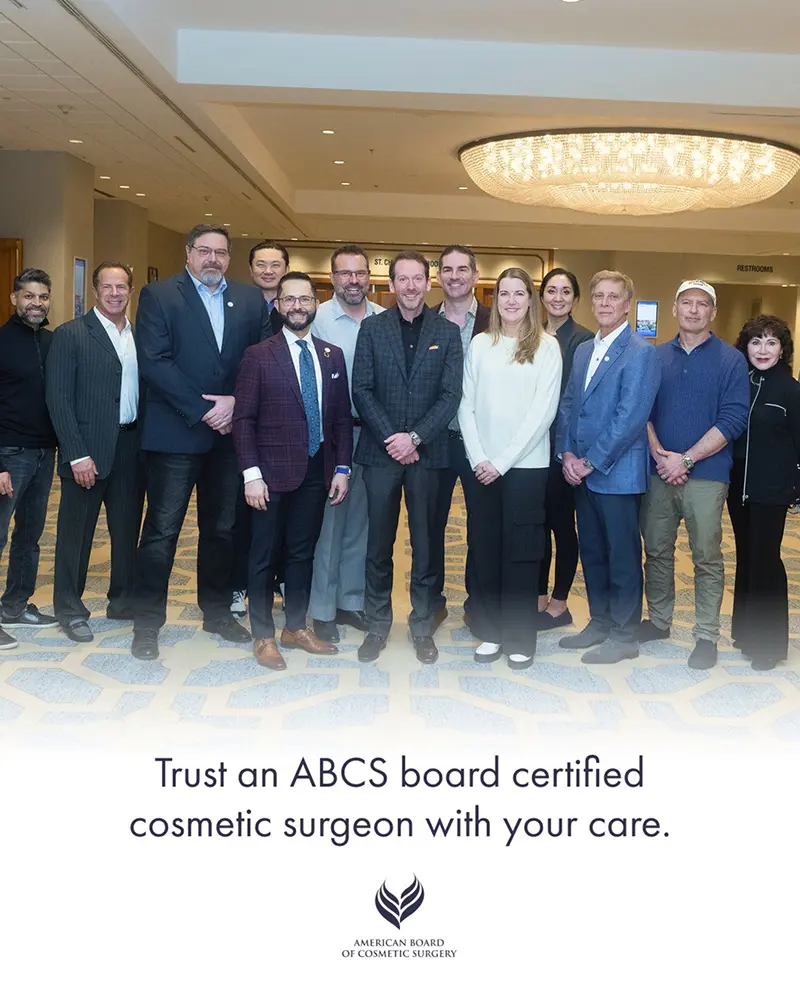
- Candidates must pass a challenging certification exam.
- Written and oral exams cover the full scope of cosmetic surgery and evaluate knowledge, surgical judgement, technical expertise, and ethics.
- Unlike other surgical boards, certification is entirely dedicated to cosmetic surgery.
- Surgeons must demonstrate expertise in a full range of modern aesthetic procedures of the face, breast, and body, including nonsurgical.
- The ABCS conducts a thorough screening and background check on each applicant.
- Diplomates pledge to act ethically, compassionately, and with the utmost integrity in all aspects of their professional and personal lives.
- Diplomates complete ongoing requirements to stay updated with the latest advances in cosmetic surgery.
- Maintaining board certification demonstrates a lifelong commitment to excellence.