-
Breast reduction surgery lifts & reshapes for a more aesthetically pleasing, smaller breast contour
-
For some patients, breast reduction can be performed using liposuction alone
-
Patients typically return to work 1-2 weeks after surgery
-
Scars are either concealed in the natural contours of the breast or easily hidden by a bra
What is Breast Reduction Surgery?
Breast reduction is a cosmetic surgery procedure that reduces the size and weight of large, heavy breasts, helping to create a more aesthetically pleasing breast contour that is better proportioned to a patient’s body. By removing excess breast tissue, fat, and sagging, stretched skin, a cosmetic surgeon can not only make the breasts smaller, lighter, and firmer, but also improve breast symmetry and eliminate sagging.
Why Consider a Breast Reduction
While many patients choose breast reduction to alleviate physical symptoms such as back, neck or shoulder pain, shoulder grooves, or discomfort while exercising, the cosmetic benefits of breast reduction should not be overlooked:
- Your breast will be lifted and firmer, helping you look more youthful
- Bras will fit more comfortably and attractively
- With better proportioned breasts, your overall silhouette will be more balanced and attractive
- Stretched areolas and/or large nipples can be reduced during the same procedure, helping you look better in and out of clothing
- Swimsuits, sports bras, and form-fitting clothes will look and feel better, helping boost your confidence during activity
Choosing a Cosmetic Surgeon
If you’re considering having a breast reduction, choosing a cosmetic surgeon is the most important decision you’ll make. While some in the plastic surgery field consider breast reduction to be a reconstructive procedure, a patient’s goal is rarely to solely correct physical symptoms without any consideration for aesthetic improvements. You should feel confident that your cosmetic surgeon can both reduce your breasts to the right size to alleviate any discomfort caused by large breasts and create a more beautiful breast shape that looks natural with your body.
- Candidates must pass a challenging certification exam.
- Written and oral exams cover the full scope of cosmetic surgery and evaluate knowledge, surgical judgement, technical expertise, and ethics.
- Unlike other surgical boards, certification is entirely dedicated to cosmetic surgery.
- Surgeons must demonstrate expertise in a full range of modern aesthetic procedures of the face, breast, and body, including nonsurgical.
- The ABCS conducts a thorough screening and background check on each applicant.
- Diplomates pledge to act ethically, compassionately, and with the utmost integrity in all aspects of their professional and personal lives.
- Diplomates complete ongoing requirements to stay updated with the latest advances in cosmetic surgery.
- Maintaining board certification demonstrates a lifelong commitment to excellence.
When you visit potential surgeons, ask how frequently he/she performs breast reduction surgery and how many total procedures that surgeon has performed. View before and after photos, not just on a surgeon’s website but also during your consultation, paying close attention to the results of patients whose “before” photos look similar to you and whose breasts in the “after” photos look good to you—this will help you understand a cosmetic surgeon’s aesthetic style, which will play a significant role in how your breasts will look after surgery.
Make sure your cosmetic surgeon is board certified; this ensures that he or she is specifically trained and experienced in cosmetic surgery and that your procedure will take place in an accredited facility, which is essential for your safety. Finally, don’t choose a cosmetic surgeon based on price alone. Your safety & results are too important. Most cosmetic surgeons offer financing options to help patients budget procedure costs.
Breast Reduction Options
Cosmetic surgeons can use one of several different surgical techniques when performing breast reduction; which technique a surgeon will use for any given patient depends on the patient’s existing breast anatomy, the type and amount of tissue to be removed, and the patient’s desired outcome.
Liposuction for Breast Reduction
In certain cases, breast reduction can be performed using liposuction alone.
The advantages of liposuction for breast reduction are a shorter, less invasive procedure, virtually undetectable scars on the breast, and lasting results. However, this technique will only achieve optimal results in certain patients. The best candidates are those who need or desire a slight to moderate reduction in breast size, have good skin elasticity and little to no sagging to correct, and whose excess breast size is largely due to excess fatty tissue.
If you have sagging, asymmetrical breasts, stretched skin, or a more significant amount of tissue to remove, one of the next breast reduction techniques will probably benefit you the most.
Vertical or “Lollipop” Breast Reduction
Patients who need a moderate reduction in breast size and have more noticeable sagging are often good candidates for a vertical breast reduction. This involves two incision sites: one is around the edge of the areola, and a second incision running vertically from the bottom of the areola to the inframammary fold, or the crease beneath the breast. This incision pattern allows a cosmetic surgeon to remove excess fat, skin and breast tissue, reshape the new smaller breast internally, and lift the breast into a more youthful position.
While a vertical breast reduction leaves some scarring on the breast, it is limited to the area below the nipple and therefore can be easily hidden beneath a bra or bikini top.
Inverted-T or “Anchor” Breast Reduction
The inverted-T breast reduction involves 3 incisions: one around the edge of the areola, one vertically from the areola to the breast crease, and one made along the crease underneath the breast. Because this technique allows for the maximum degree of tissue removal and reshaping, cosmetic surgeons will typically use this approach if a patient needs a more significant breast size reduction and/or has considerable sagging or asymmetry to correct.
The scars resulting from an inverted-T or anchor breast reduction are similar to those from a vertical reduction, with one additional, thin scar running along the crease beneath the breast. With proper care, scars typically fade considerably over the first year or so after surgery and are easily concealed by clothing, even a bikini top.
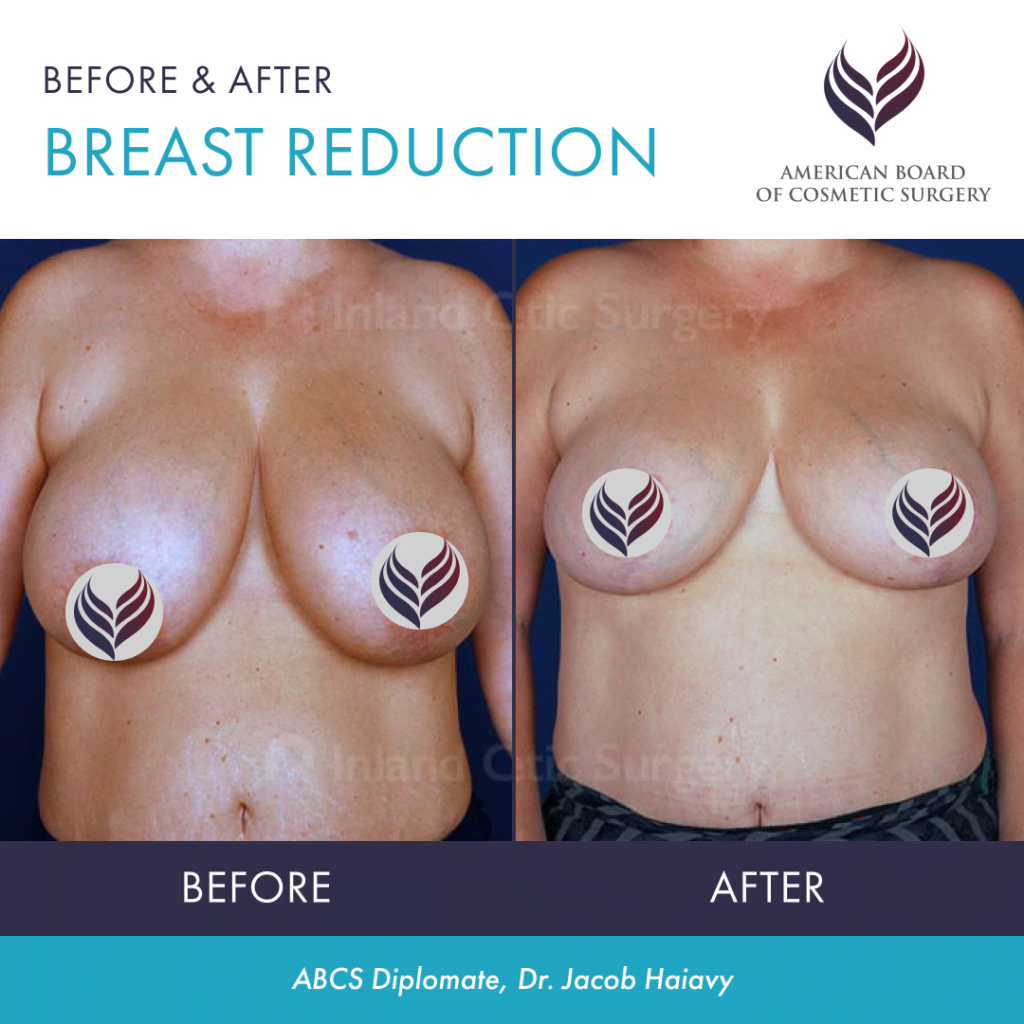
Breast Reduction Surgery & Recovery
Breast reduction surgery is typically performed as an outpatient procedure using general anesthesia or intravenous sedation with local anesthesia. After making the incisions using one of the techniques described above, your cosmetic surgeon will remove excess breast tissue, fat, and skin, moving the nipple/areola complex to a higher, more forward position on the chest. The remaining breast tissue and skin will be reshaped and closed with dissolvable sutures. The areolas can be reduced to a more proportional size during the procedure as well.
After spending a brief time in supervised recovery, you will be able to go home that same day to continue your recovery. Your chest will be bandaged, and you may be sent home in a surgical bra. You can expect to feel considerable soreness the first couple of days after your procedure, and your cosmetic surgeon will prescribe pain medication to help keep you comfortable during this initial period. Gently placing ice packs on top of the bandages can help alleviate discomfort as well.
The amount of time you need to recover from breast reduction will depend on your natural healing rate as well as the extent of surgery performed. You will be able to get up and walk around the same day of surgery, although you should have a trusted adult with you during the first 24 hours. While you may be permitted to shower a few days after surgery, you will probably need help getting dressed, as you will not have full range of motion in your chest and shoulders at first.
Most patients feel ready to drive and return to a desk job within 1 week, after they are no longer taking prescription pain medication. Your cosmetic surgeon will likely have you wait a minimum of 3 to 4 weeks before resuming exercise other than walking; this helps to ensure your incisions heal properly. It is essential to follow your cosmetic surgeon’s regarding activity after breast reduction.
See transformative results from our board-certified cosmetic surgeons.
Life After Breast Reduction
Because it both alleviates physical and emotional discomfort and enhances a patient’s appearance, breast reduction can be one of the most rewarding cosmetic surgery procedures. Patients note an increase in self-confidence as well as a renewed sense of freedom to wear the clothes they want to wear and participate in physical activities they had previously avoided.
While many patients experience an immediate relief from back and shoulder pain after breast reduction, it is important to understand that it will take some time for your final results to settle in. Swelling, soreness, and tingling are typical after breast reduction, so your new smaller breasts may appear a little larger than you had expected while initial swelling is present. Additionally, the breasts often heal at a different rate, so you may notice some asymmetry during the first few months of your recovery.
After about 2-3 months, your final results will be more or less in place and you can shop for new bras with confidence. However, you may notice subtle changes for the first 6 to 12 months.
- Key Benefits
- Glossary
- Reduces breast size: Breast reduction surgery can remove excess breast tissue, fat, and skin, reducing the size of the breasts and creating a more proportionate body shape.
- Alleviates physical discomfort: In addition to reducing breast size, breast reduction surgery can also alleviate physical discomfort associated with large breasts, such as skin irritation, bra strap grooving, or difficulty exercising.
- Improves overall body proportion: By reducing the size of the breasts and improving overall body proportion, breast reduction surgery can help women to look and feel more comfortable and confident in their own skin.
- Reduction mammaplasty (breast reduction): A surgical procedure to reduce the size and reshape excessively large breasts.
- Gigantomastia: A medical condition characterized by abnormally large breasts.
- Macromastia: Another name for the condition of having abnormally large breasts in proportion to the body.
- Inframammary fold: The natural crease or fold beneath the breast where it meets the chest wall.
- Glandular tissue: The breast tissue composed of milk ducts, lobules, and supporting structures responsible for milk production.
- Areola: The pigmented area surrounding the nipple on the breast.
- General anesthesia: A state of controlled unconsciousness induced by medications to eliminate pain during surgery.
- Local anesthesia: Administration of medication to numb a specific area of the body, typically used for minor procedures and surgeries.
- Mammogram: An X-ray examination of the breast to screen for breast cancer or evaluate breast abnormalities.
- Liposuction: A surgical procedure that removes excess fat deposits from specific areas of the body, often used in combination with other breast surgeries for contouring purposes.
- Hematoma: A collection of blood that forms outside of blood vessels, often resulting from injury or surgery.
- Breast ptosis: The sagging or drooping of the breasts, often caused by aging, pregnancy, weight loss, or genetic factors.
Will the Results of Breast Reduction Last?
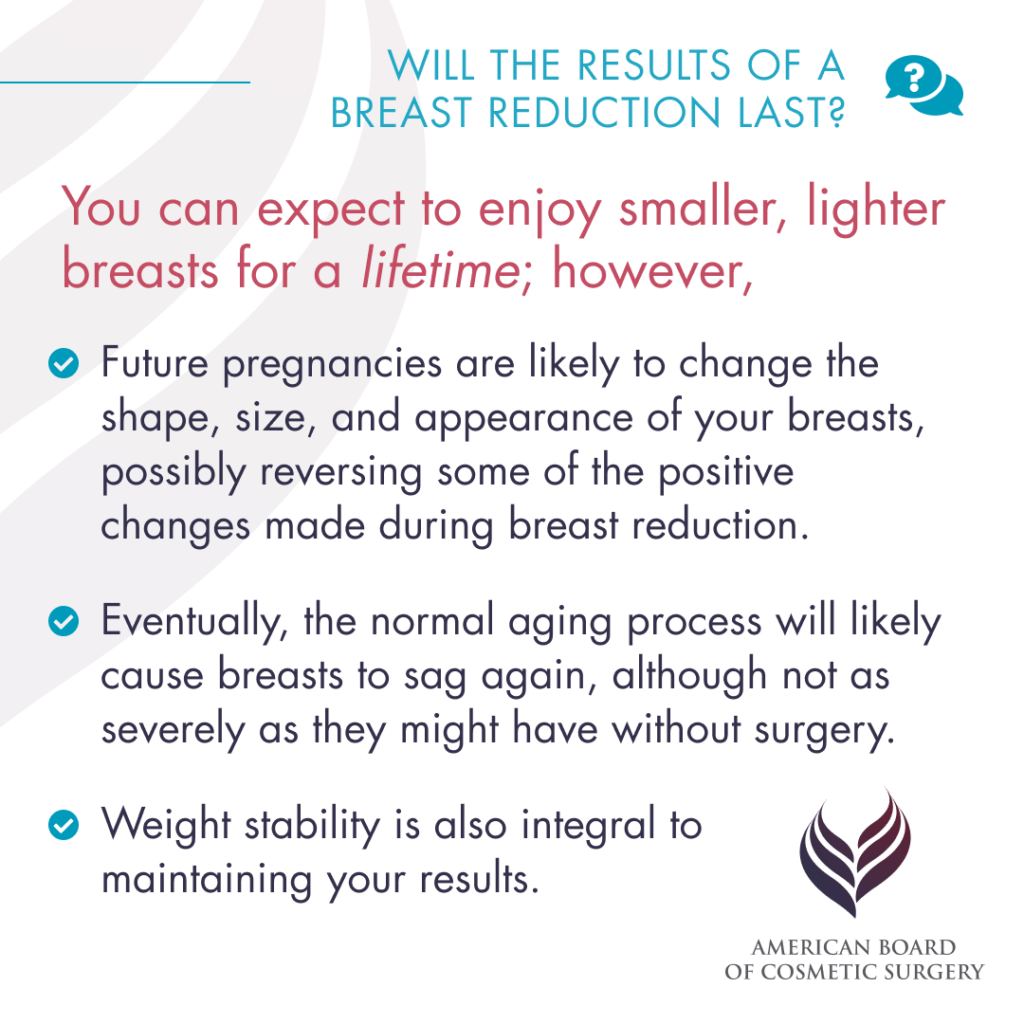
After breast reduction, you can expect to enjoy smaller, lighter breasts for a lifetime, so long as you maintain a stable weight and do not have any more children. However, nothing can stop the normal aging process. Eventually your breasts will probably begin to sag once again, although not as severely as they might have before breast reduction.
Also, future pregnancies are likely to change the shape, size, and appearance of your breasts, possibly reversing some of the positive changes made during breast reduction. If you are planning to have more children, talk to your cosmetic surgeon. He or she can help you weigh the pros and cons of having surgery now or waiting until you have finished having children.
If you have questions about breast reduction or are considering having surgery, we encourage you to consult with a board certified cosmetic surgeon, who can help you learn more about how this procedure might help you. You can find cosmetic surgeons in your area by using our ABCS Find-a-Surgeon tool.